Shih Tzu Dog Redwork: A Designer’s Review
As an embroidery designer who has spent countless weekends behind a craft fair table, I have learned that not every design translates into sales. Some look beautiful on a screen but vanish in a busy booth. Others become instant bestsellers because they hit the right emotional note with customers. Today, I am pulling Shih Tzu Dog Redwork out of my digital library to evaluate its potential for the upcoming market season. This is not just about aesthetics; it is about practicality, production speed, and customer appeal.
First Impressions: Minimalism Meets Personality
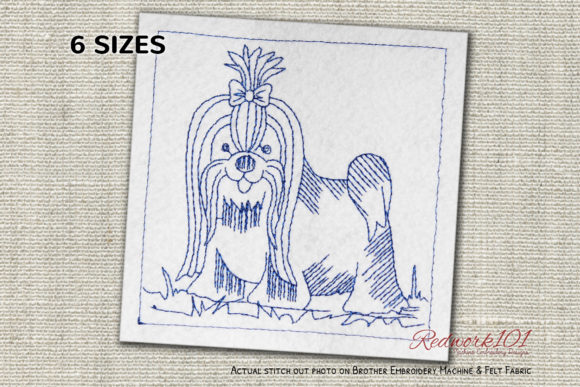
The immediate vibe of Shih Tzu Dog Redwork is clean, classic, and undeniably cute. Redwork, by definition, relies on a single thread color—traditionally red—against a neutral background. This simplicity is its greatest strength. In a world of overly complex, multi-colored digitizations, this design offers a breath of fresh air. It feels farmhouse-chic yet modern enough for contemporary home decor. The silhouette of the Shih Tzu is distinct, capturing the breed’s characteristic fluffy head and expressive eyes without getting bogged down in excessive detail. For dog lovers, specifically those devoted to this beloved breed, the recognition factor is instant. It does not need explanation. At a glance, a customer knows exactly what it is, which is crucial for stopping foot traffic at a busy craft fair.
Product Versatility for the Craft Fair Booth
When planning my booth inventory, I look for designs that can stretch across multiple product categories. Shih Tzu Dog Redwork is exceptionally versatile. Here is how I envision using it:
- Tote Bag Design: A natural canvas tote with this design centered or placed on the lower corner sells itself. The contrast of red thread on beige or white canvas is striking and photographs beautifully for online listings.
- Apron Embroidery: Kitchen aprons are staple sellers. Placing the Shih Tzu on the bib or the pocket adds a personalized touch that appeals to home cooks and pet owners alike.
- Tea Towel Embroidery: Flour sack towels are lightweight and easy to ship. The open weave of these towels works well with redwork, provided the stitch density is appropriate. These make excellent impulse buys or add-on items.
- Embroidered Patch: If the design holds up at a smaller size, turning it into an iron-on or sew-on patch opens up a new revenue stream. Patches are low-cost, high-margin small shop products that appeal to younger demographics.
- Pillow Covers: A minimalist pillow cover with this design fits perfectly into modern farmhouse or rustic decor themes. It elevates the perceived value of a simple linen cushion.
For Etsy sellers and digital sellers, this design also serves as a strong anchor for printable mockup listings. Showing the design on various fabrics helps customers visualize the finished product, increasing conversion rates.
Production Practicality and Batch Efficiency
From a production standpoint, time is money. One of the biggest advantages of Shih Tzu Dog Redwork is its likely efficiency. Redwork designs typically involve running stitches or simple satin stitches without heavy fill areas. This means less thread consumption, fewer thread breaks, and faster machine run times. For a handmade product business, this allows for higher volume production without sacrificing quality. You can hoop multiple items, start the machine, and move on to packaging or other tasks while the embroidery completes.
However, there are critical technical considerations. The product description notes that "The Box Stitch shown in picture is optional" and mentions that the outer box color may differ. This suggests the design might come with a framing element. As a designer, I advise testing whether the box enhances the composition or clutters it. For a clean, modern look, I often skip optional frames unless they serve a specific structural purpose. Furthermore, since the description states you can "skip the color directly," ensure your embroidery software allows for easy color blocking or deletion of unnecessary stops. This flexibility is vital for customizing the design for different fabric colors.
Navigating Fabric and Stabilizer Challenges
While redwork is forgiving, it is not immune to poor execution. The visibility of every stitch is heightened in single-color designs. Therefore, your choice of stabilizer is paramount. For woven fabrics like cotton tote bags or linen pillows, a cut-away stabilizer provides lasting durability, while tear-away might suffice for stable quilting cottons. For textured towels, which have a loose weave, a topping or water-soluble film is essential to prevent the stitches from sinking into the fabric texture. Without it, the crisp lines of the Shih Tzu’s outline will look muddy and undefined.
Dark fabric presents another challenge. Traditional redwork relies on light backgrounds. If you wish to embroider on navy or black, you must change the thread color to white or cream. Always test thread contrast on scrap fabric before committing to a full batch. What looks vibrant on screen may disappear on dark textiles if the thread sheen is too low.
Visual Appeal and Customer Engagement
In a crowded marketplace, visual clarity drives sales. Shih Tzu Dog Redwork stands out because it is uncluttered. Customers walking past a booth process visual information quickly. A complex, multi-colored design requires them to stop and decipher. A bold, single-color silhouette registers instantly. This immediate recognition creates an emotional connection, especially for dog owners who see their own pets reflected in the art. This emotional hook is what transforms a browser into a buyer.
Moreover, the simplicity of the design conveys a sense of premium handmade quality. It looks intentional and artistic rather than mass-produced. When paired with high-quality blanks, such as thick canvas bags or pure linen towels, the perceived value increases. This allows for healthier profit margins for boutique makers and creative entrepreneurs.
Essential Pre-Production Checklist
Before you load this machine embroidery design into your commercial embroidery setup, follow these steps to ensure success:
- Check the Details: The provided description lacks specific stitch count, file formats, and exact hoop size requirements. Always verify these details in the actual download package. Ensure the format matches your machine (PES, DST, JEF, etc.).
- Test on Scrap: Never stitch directly on your final product first. Use the same fabric type and stabilizer combination to check for puckering or registration issues.
- Review Stitch Density: Inspect the design in your software. If the lines are too close together, they may merge on textured fabrics. Adjust density if necessary.
- Confirm Licensing: Ensure you have the correct commercial license for selling finished products. Digital embroidery file licenses vary, and compliance is non-negotiable for professional sellers.
- Create Mockups: Take high-quality photos of your test stitches. Use these for your Etsy listings and social media marketing to gauge interest before producing large inventory.
In conclusion, Shih Tzu Dog Redwork is a strong contender for any embroidery business focusing on pet lovers and home decor. Its simplicity reduces production risk while maximizing visual impact. By paying attention to fabric choice, stabilizer selection, and presentation, you can turn this digital asset into a consistent revenue generator for your craft fair booth and online store. It is a reminder that in embroidery, sometimes less is indeed more.